The Essential Guide to Breaker Steel
The Essential Guide to Breaker Steel: Features, Sizing, and Selection
Introduction
Whether you are breaking up a concrete slab, cutting through fresh asphalt, or driving ground rods, your handheld breaker is only as good as the steel attached to it. Choosing the right tool isn’t just about getting the job done fast; it’s about maximizing efficiency, boosting productivity, and protecting your expensive machinery from secondary damage.
In this guide, we will break down what makes high-quality breaker steel, how to read sizing specs, and how to select the exact tool for your application.
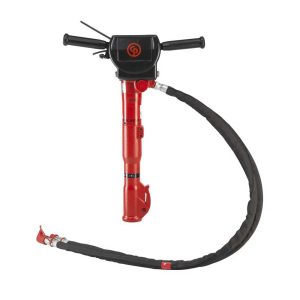 Chicago Pneumatic BRK 40 VR 1-1/4 in X 6 in Breaker 1801344721
The Anatomy of Quality Breaker Steel
It might look like a simple piece of metal, but high-quality breaker steel relies on precise engineering. For instance, Chicago Pneumatic (CP) working tools are manufactured from low carbon steel. This specific construction gives you the best of both worlds:
- Case-Hardened Skin: A tough exterior built to withstand high percussion.
- Softer Core: A more flexible center that resists core brittleness, allowing the tool to absorb bending stresses without snapping.
Furthermore, premium shanks are manufactured to ISO 1180 dimensional tolerances. This ensures an exact fit inside the equipment bushings and chucks, preventing premature wear on your machine.
Understanding Breaker Steel Sizing
When ordering or replacing breaker steel, you must match the shank specifications to your handheld equipment chuck. If a shank is too short, it can cause a highly damaging “dry fire” scenario. Always look for these four specifications:
- Type: Hexagonal (Hex) or Round.
- Diameter: Common hex diameters range from 0.580″ up to 1-1/4″. Round diameters typically range from 9/16″ to 0.680″.
- Length: Standard shank lengths include 2″, 3″, 3-1/4″, 4-1/4″, 6″, and 6-1/4″. (Common standard industry sizes are 1″ x 4-1/4″, 1-1/8″ x 6″, and 1-1/4″ x 6″ with a 1/2″ wide collar).
- Collar Type: Round or oval.
Tool Selection: Matching Steel to the Application
Using the wrong tool for the job can stall your timeline or ruin your equipment. Use this breakdown to make the right choice:
- Moil Point: The most common tool. It uses a wedging action to break brittle or friable materials like slab concrete. It is the best tool for creating holes where there is no open edge. However, the line of fracture cannot be controlled.
- Narrow Chisel (Flat Chisel): Similar to the moil point but controls the line of fracture. It is ideal for general breaking when you have an open surface or edge to work from, and for cleanly trimming edges.
- Wide Chisel: Designed for line contact instead of point contact, making it perfect for cutting thin asphalt (like sidewalks) where the material is thinner than the 2″ depth of the blade.
- Asphalt Cutter: Features a thin (5″ x 6″) blade designed specifically for clean cuts on hot rolled asphalt. Because of its thin profile, it is self-sharpening, meets lower resistance, and cuts incredibly fast.
- Digging Chisel & Digging Spade: Used to loosen material before excavation after the top crust is removed. The Chisel has a narrower (3″), thicker profile to focus blow energy into tough ground or high aggregate concentrations. The Spade has a wider blade for greater productivity in softer ground with fewer rocks.
- Clay Spade: Purpose-built for heavy, clinging clays. Its scooped/curved profile naturally pulls the blade toward the open face so it doesn’t get stuck in a trench or tunnel.
- Wedge Chisel (Frost Wedge): A heavy-duty tool with a long taper that delivers progressive wedging force to break out frozen ground. Always use it to break toward an open face.
- Ground Rod Driver: Features a cup-formed end designed to hold electrical ground rods safely in place while driving them into the dirt. It is made of specialized steel to handle intense metal-to-metal contact.
- Bush Hammer: A combination head and shaft system containing 9 or 16 tungsten carbide buttons used to re-dress concrete or natural stone when a new surface layer needs to be applied.
- Tie Tamper: Specifically designed for railway maintenance to penetrate the ballast bed and pack it tightly under sleepers/ties. Built to withstand high stress and periods of blank firing.
- Tamping Pad & Shaft: A two-piece system (using a tapered male shaft and a female-connected square or round pad) used to compact soil or temporary asphalt refills.
Conclusion
Investing in high-quality, OEM-specified breaker steel guarantees top performance. Trying to save a few dollars on off-brand steel frequently results in massive, expensive secondary damage to your machines. Choose the right tool, match your specs, and let the steel do the work!
Ready to Equip Your Team with the Right Steel?
Don’t risk costly downtime or equipment damage with mismatched tools. Our experts are ready to help you match the exact shank specifications and tool types to your machinery and application.